 Gold IRA Rollover
Disclosure : The information provided on this website is for educational purposes only. Consult with a financial professional before making any investment decisions. We may be compensated if you use companies, products or services based on our recommendations. Learn more.
How to Open a Gold IRA: A Practical Guide for Retirement Investors
For many retirees and pre-retirees, one of the biggest concerns is protecting long-term purchasing power while maintaining a diversified retirement portfolio.
Traditional retirement accounts are often heavily concentrated in stocks, bonds, and mutual funds. While these assets can play an important role in long-term growth, some investors choose to allocate a portion of their retirement savings to physical precious metals as an additional diversification strategy.
A Gold IRA is one way to accomplish that.
This guide explains how Gold IRAs work, the potential benefits and risks, and the steps involved in opening and funding an account.
What Is a Gold IRA?
A Gold IRA is a self-directed Individual Retirement Account that allows investors to hold certain IRS-approved precious metals, including gold, silver, platinum, and palladium.
Unlike conventional IRAs that typically hold paper assets such as stocks and mutual funds, a Gold IRA can hold physical bullion that is stored in an approved depository on behalf of the account owner.
Many investors consider Gold IRAs for three primary reasons:
- Portfolio diversification
- Potential inflation hedging characteristics
- Reduced reliance on traditional financial assets
However, precious metals can fluctuate in value and may not be appropriate for every investor. Gold should generally be viewed as one component of a broader retirement strategy rather than a standalone solution.
Is a Gold IRA Right for Your Retirement Plan?
Before opening a Gold IRA, consider the following questions:
Do You Need Additional Diversification?
If most of your retirement savings are invested in stocks and bonds, adding exposure to precious metals may help diversify your portfolio.
Are You Comfortable With Market Fluctuations?
Although gold has historically retained value over long periods, prices can rise and fall significantly in shorter time frames.
Do You Understand the Costs?
Gold IRAs typically involve account administration fees, storage fees, and dealer markups that may not exist in traditional retirement accounts.
Understanding these costs is essential before making any investment decision.

The 6-Step Process for Opening a Gold IRA
Step 1: Select a Qualified Gold IRA Custodian
IRS rules require Gold IRAs to be administered by an approved custodian.
A custodian is responsible for:
- Account administration
- Regulatory compliance
- Processing rollovers and transfers
- Coordinating approved storage
When comparing custodians, review:
- Fee structure
- Experience with precious metals IRAs
- Customer reviews
- Educational resources
- Storage options
Step 2: Fund Your Account
Most investors fund a Gold IRA using one of three methods:
- Direct rollover from a 401(k)
- IRA-to-IRA transfer
- New annual contributions (subject to IRS limits)
A direct rollover is often the simplest option because funds move directly between custodians without creating a taxable event when completed properly.
Step 3: Choose Eligible Precious Metals
IRS rules permit only certain bullion products and coins.
Eligible metals generally include:
- Gold (minimum 99.5% purity)
- Silver (minimum 99.9% purity)
- Platinum (minimum 99.95% purity)
- Palladium (minimum 99.95% purity)
Not all coins and bars qualify, so verify eligibility through your custodian before purchasing.
Step 4: Arrange Secure Storage
IRS regulations require precious metals held within a Gold IRA to be stored in an approved depository.
Investors typically choose between:
- Segregated storage
- Non-segregated (commingled) storage
Storage fees vary depending on the provider and storage arrangement selected.
Step 5: Monitor Your Allocation
As market conditions change, periodically review whether your precious metal allocation remains consistent with your retirement objectives and risk tolerance.
Step 6: Understand Distribution Rules
Gold IRAs follow many of the same distribution rules as traditional retirement accounts.
Traditional Gold IRAs may be subject to Required Minimum Distributions (RMDs), while qualified distributions from Roth IRAs may receive different tax treatment.
Consult a tax professional regarding your specific situation.
Benefits and Risks of a Gold IRA
Potential Benefits:
✓ Portfolio diversification
✓ Physical ownership of precious metals through a retirement account
✓ Potential hedge against inflation and currency depreciation
✓ Tax advantages associated with IRA structures
Potential Risks:
✓ Precious metal prices can be volatile
✓ Storage and administration fees may reduce returns
✓ Gold does not generate dividends or interest
✓ Future performance cannot be guaranteed
Every investment involves risk, including the possible loss of principal.
Free Gold IRA Guide
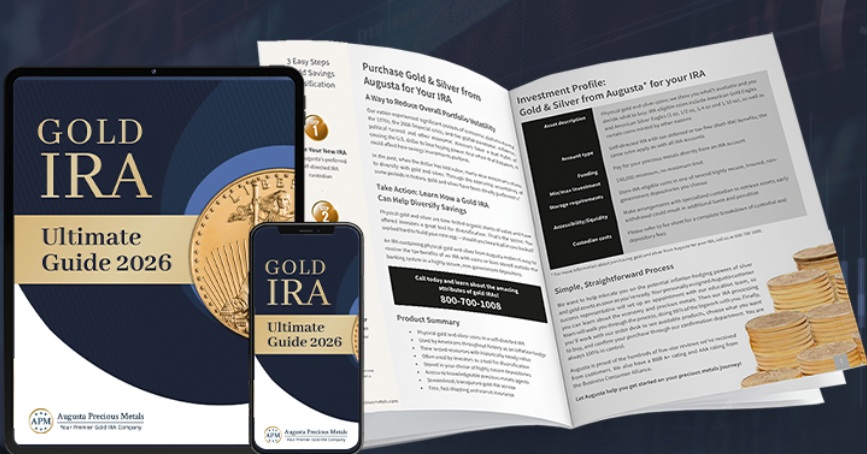
If you’re considering a Gold IRA and would like additional educational materials, you can request a free investor guide that explains:
- How rollovers work
- Eligible precious metals
- Storage requirements
- Fee considerations
- Common mistakes to avoid
No purchase is required to receive the guide.
Ready to Open Your Gold IRA?
Whether you’re new to Gold IRAs or just looking to compare your options, Augusta’s Free Gold IRA Guide provides detailed, easy-to-understand information to help you get started.
👉 Download the guide now or call 855-937-3093 to speak with an IRA specialist—no obligation required.